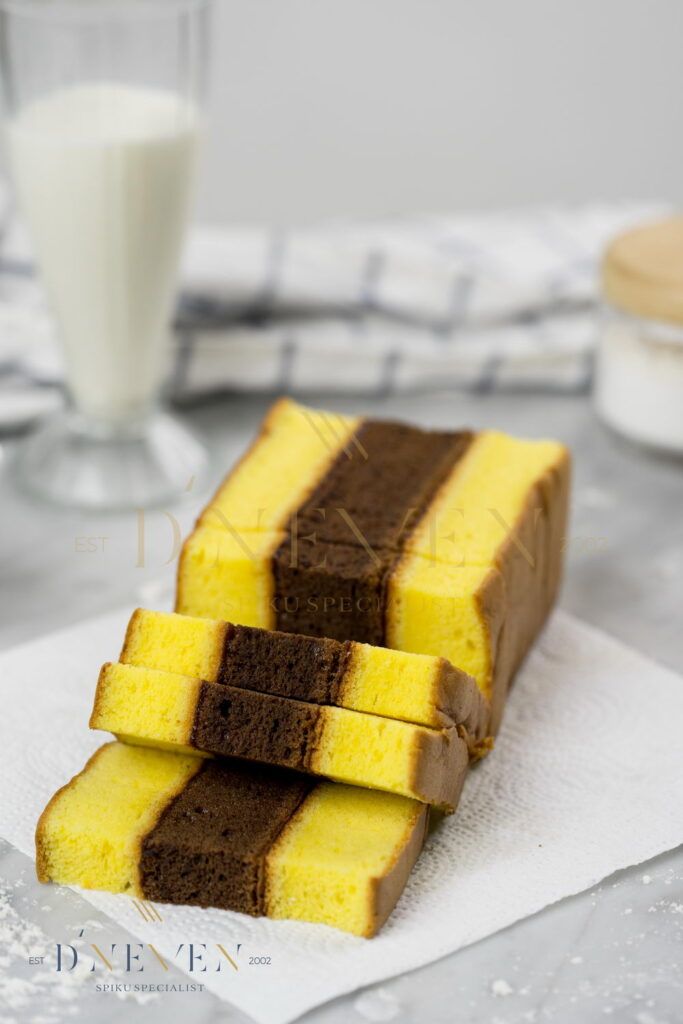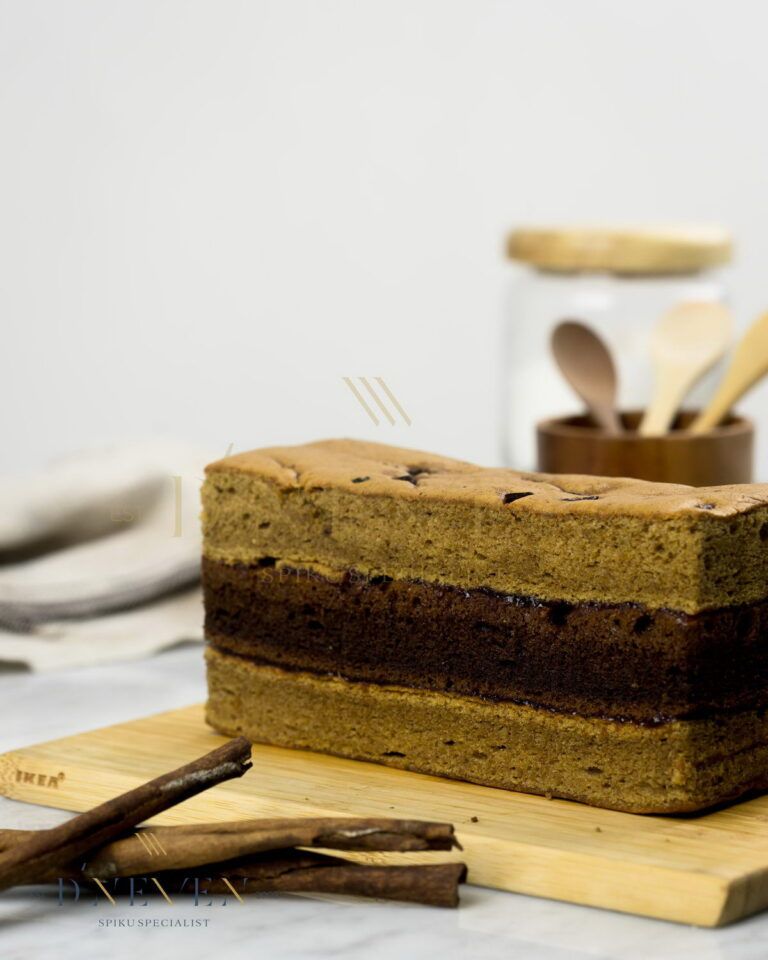
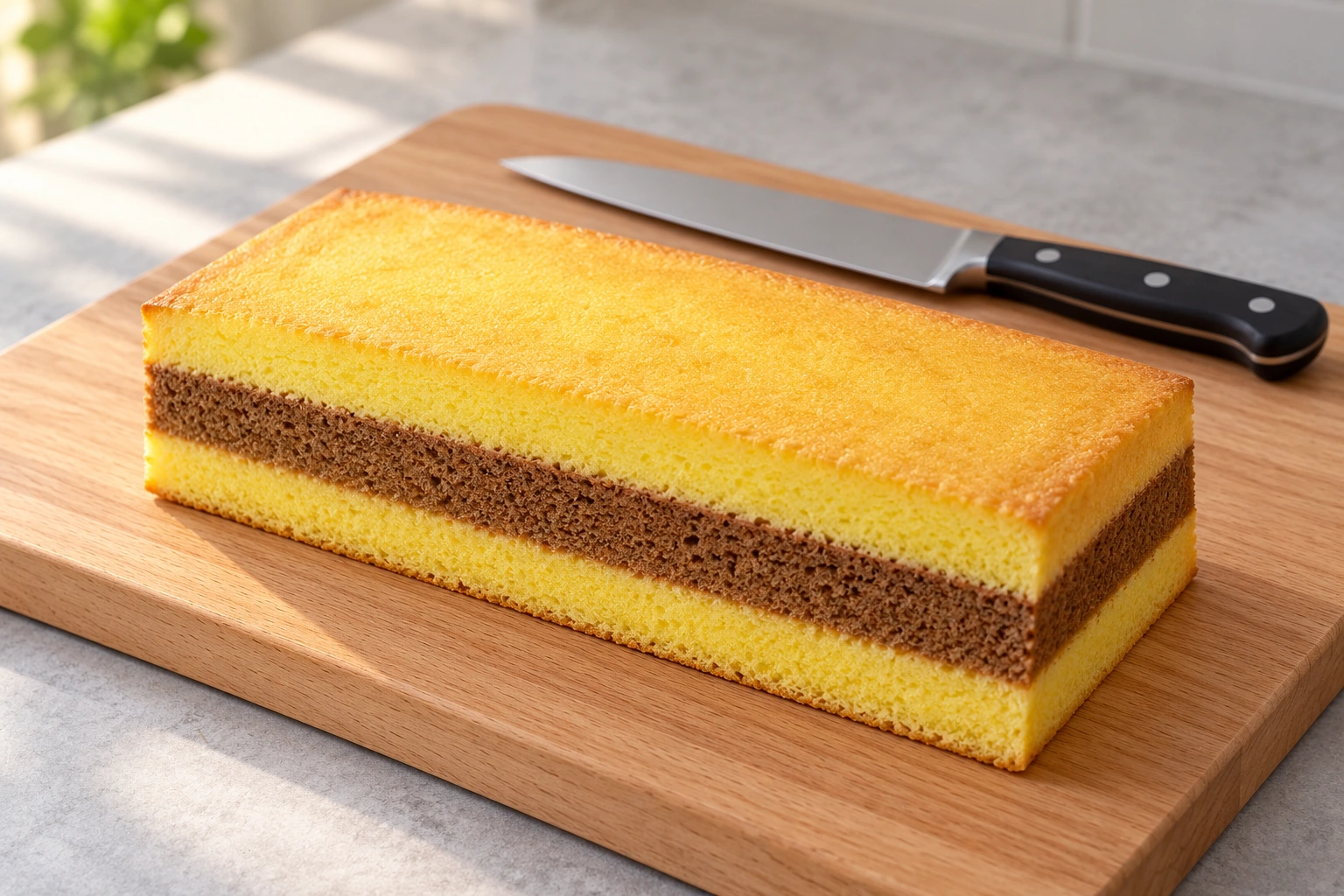
Neat spiku slices start with a stable board, the correct cutting direction and a clean blade. Cut through every layer rather than separating the top from the bottom. Plan the spacing before making the first cut so the opening slice is not oversized and the last one unexpectedly narrow.
There is no need to reproduce the portion size in a catalogue photograph. Consider the number of people, the cake’s role on the table and the actual product purchased. This guide explains a cutting arrangement, not a guaranteed serving yield for every package.
Prepare the space before opening the box
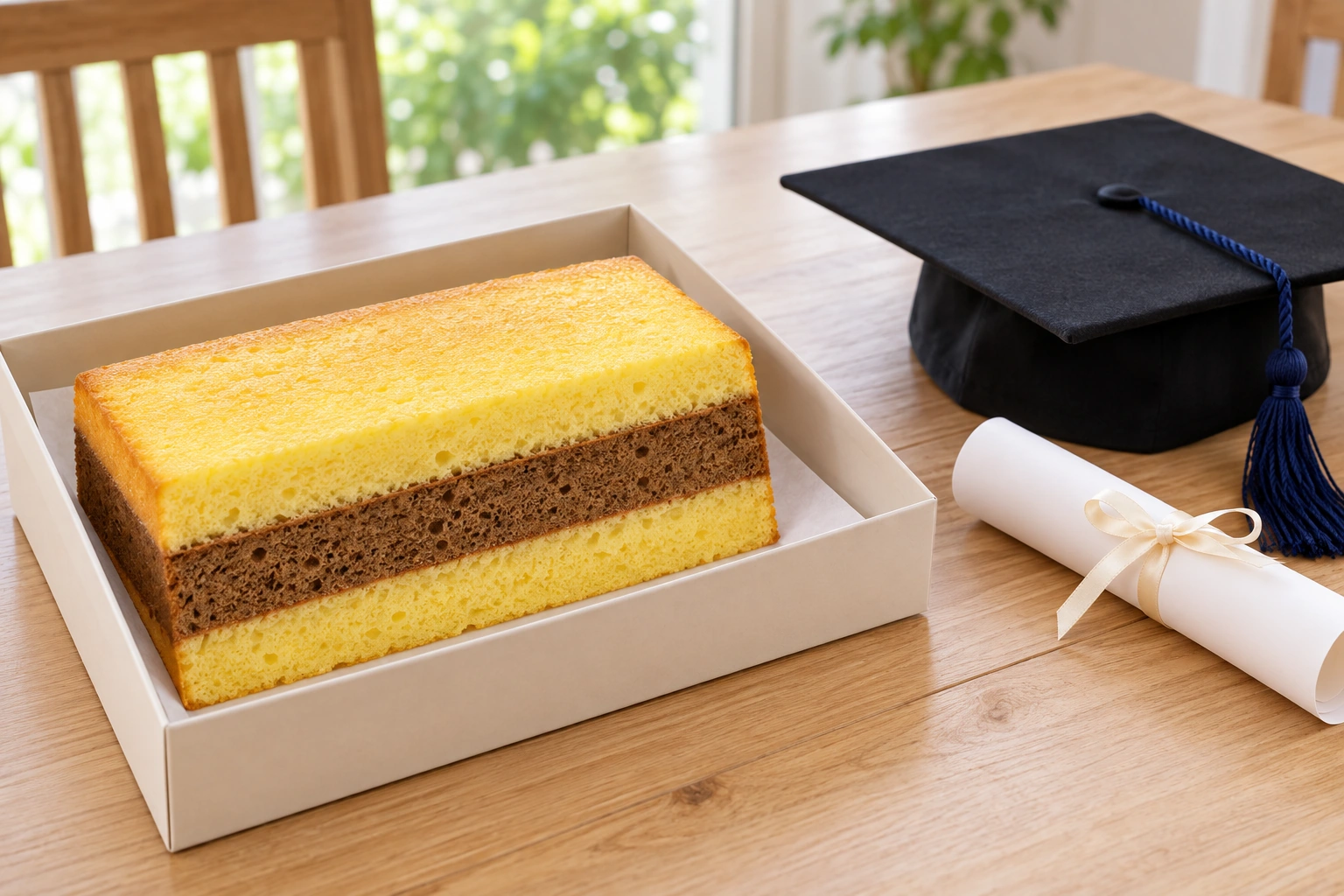
Choose a flat surface that will not slide. Place a clean cutting board with enough room for your hands, knife and serving plates. A gift box is not automatically a suitable cutting surface; follow the product instructions and prepare separate equipment when needed.
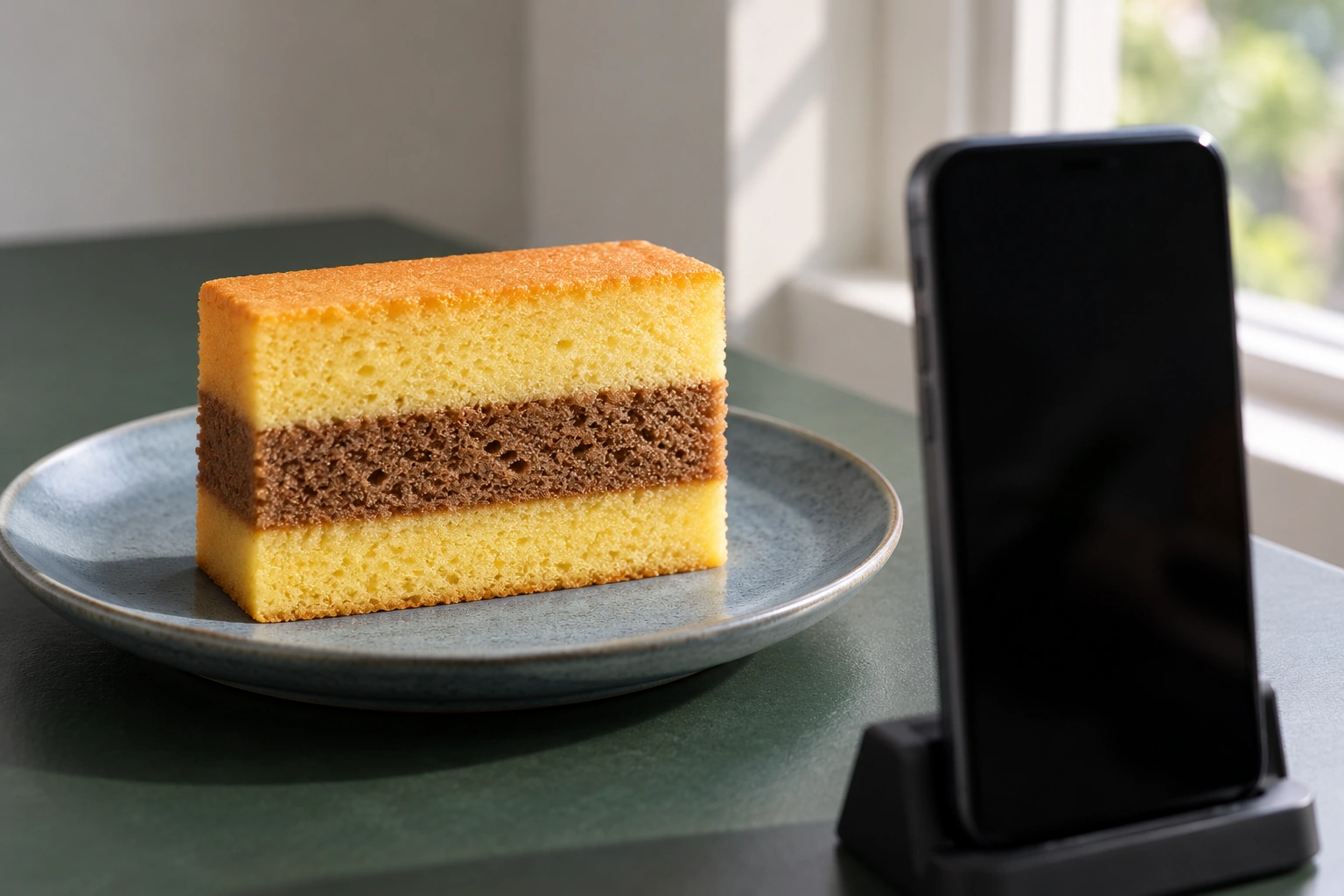
Have an appropriate cake knife, a lifting utensil and a clean cloth ready for the blade. Keep phones, bags, flowers and gift accessories away from the work area. Clean hands and tools make it easier to keep the serving process orderly.
Open the packaging when the serving space is ready. Follow the handling instructions for the product received. Do not turn a chilling time recommended for another cake into a spiku rule, because ingredients and product conditions can differ.
Mark the direction and spacing before cutting
Look at the side that displays the complete layers. For horizontally layered spiku, each slice passes down from the top to the board, carrying the full arrangement. Cutting along the layers produces a different serving from the familiar layered slice.
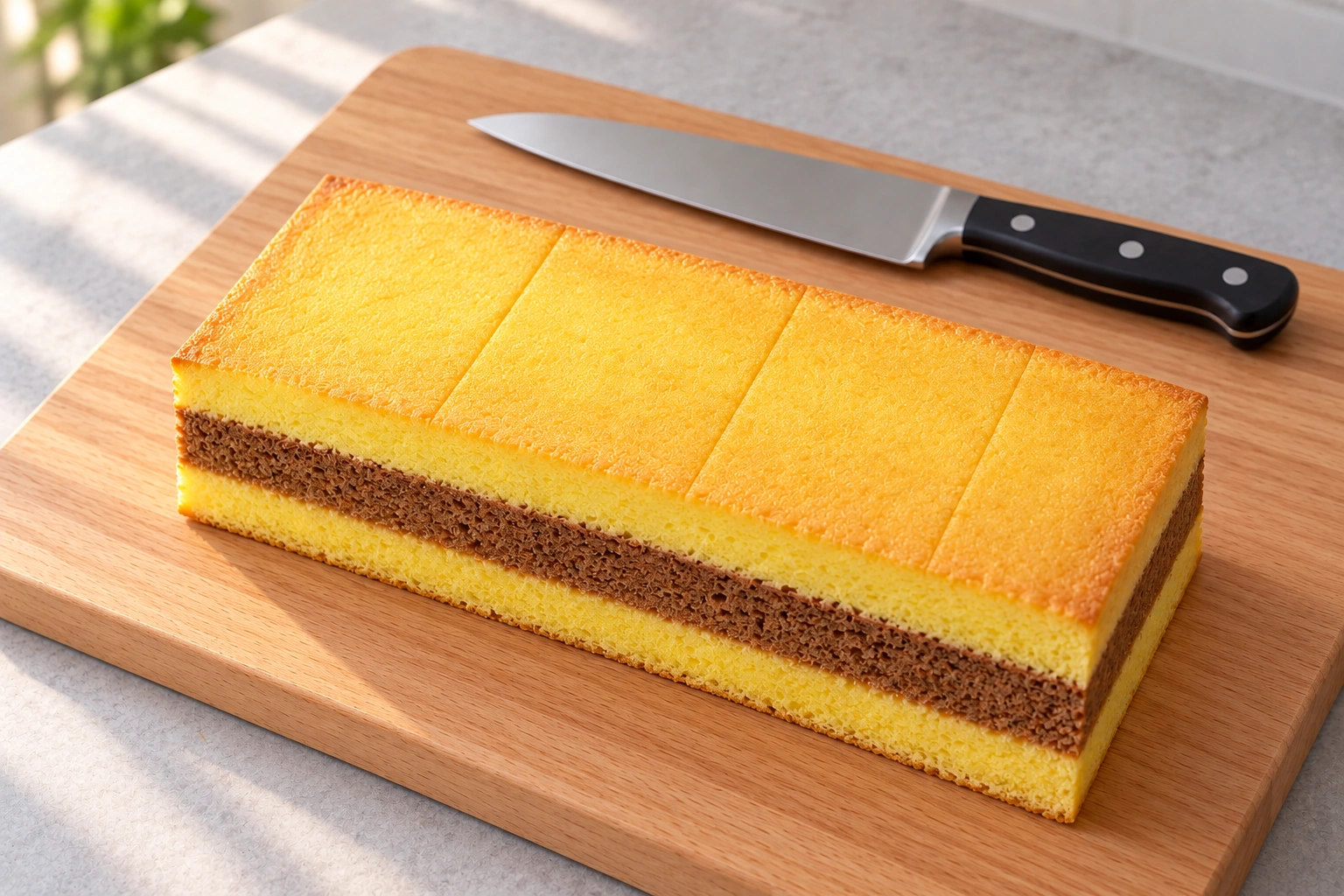
Choose a sensible division and make light marks on top if useful. Check the spacing from one end to the other before completing the cuts. The marks are a guide, not a requirement to use one centimetre measurement for every product.
Smaller slices may work when other food is also being served. If spiku is the main sweet course, a different division may be appropriate. Decide before cutting so the portion size does not change halfway through the cake.
Clean the blade and move each slice gently
Use a controlled movement and avoid squeezing the cake with your supporting hand. If the blade collects crumbs or filling, clean it before the next slice. Material left on the knife can be dragged across the next cut face.
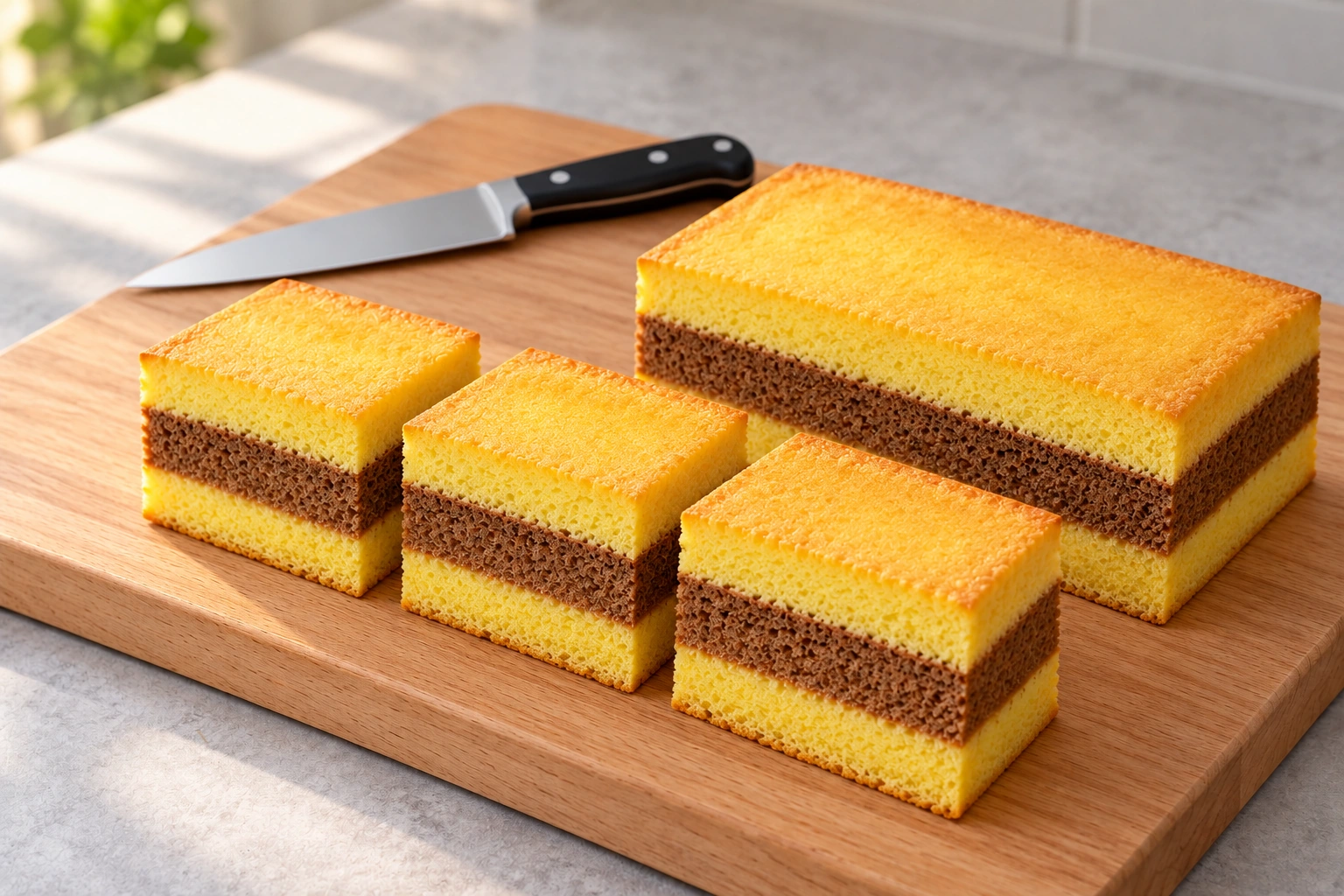
King Arthur Baking explains the value of cleaning a knife between slices to reduce carried crumbs and smearing. Apply that clean-blade principle; advice for frosting does not automatically apply to an unfrosted spiku.
Support each slice underneath when moving it. Avoid lifting only by its top layer or pulling a piece that remains attached to the base. Leave a little space on the plate so the layers stay visible and neighbouring pieces do not press together.
Check one slice before continuing
Use the first slice to assess the result. Has the cake compressed, have layers shifted, or is the piece too thick for the available plate? Adjust one thing first, then try again with a steadier movement.
| What you notice | What to check |
|---|---|
| Crumbs across the cut face | Blade cleanliness and cutting movement |
| Layers shifting during lifting | Support underneath and incomplete separation |
| Narrower pieces near the end | Spacing planned before making full cuts |
| Slices sticking together on the plate | Placement space and quantity served at once |
Do not conceal a problem by pressing pieces back together. The aim is a serving that looks inviting and is easy to take, rather than copying a picture at the expense of the product’s shape.
Serve in stages and protect the remainder
Move a manageable quantity to the serving plate and follow storage instructions for the remainder. A cut cake does not have identical storage needs in every setting. Journey length, room conditions and product type still matter.
For several flavours, make the arrangement easy to understand without suggesting that all variants have the same ingredients or allergen information. Consider shared knives and utensils when guests have specific ingredient requirements. A clean-looking plate alone does not establish suitability for a particular dietary need.
Keep the work area clear as you continue. Move completed plates aside before cutting the next portion, and give the person carrying them a stable place to set them down. This avoids reaching across the knife or juggling a plate while a slice is being lifted.
If two people help, separate cutting from carrying. Agree when a slice is ready to move so hands do not meet over the board. This keeps movements calm, particularly when several guests request portions at once. The helper can also check that the next clean plate is ready rather than reaching across the knife during a cut.
For the wider table arrangement, read how to serve spiku. If you are still choosing the cake, consult Dneven’s information and explain the serving need before ordering. Once the product is clear, a simple cutting plan helps its layers remain visible when shared.