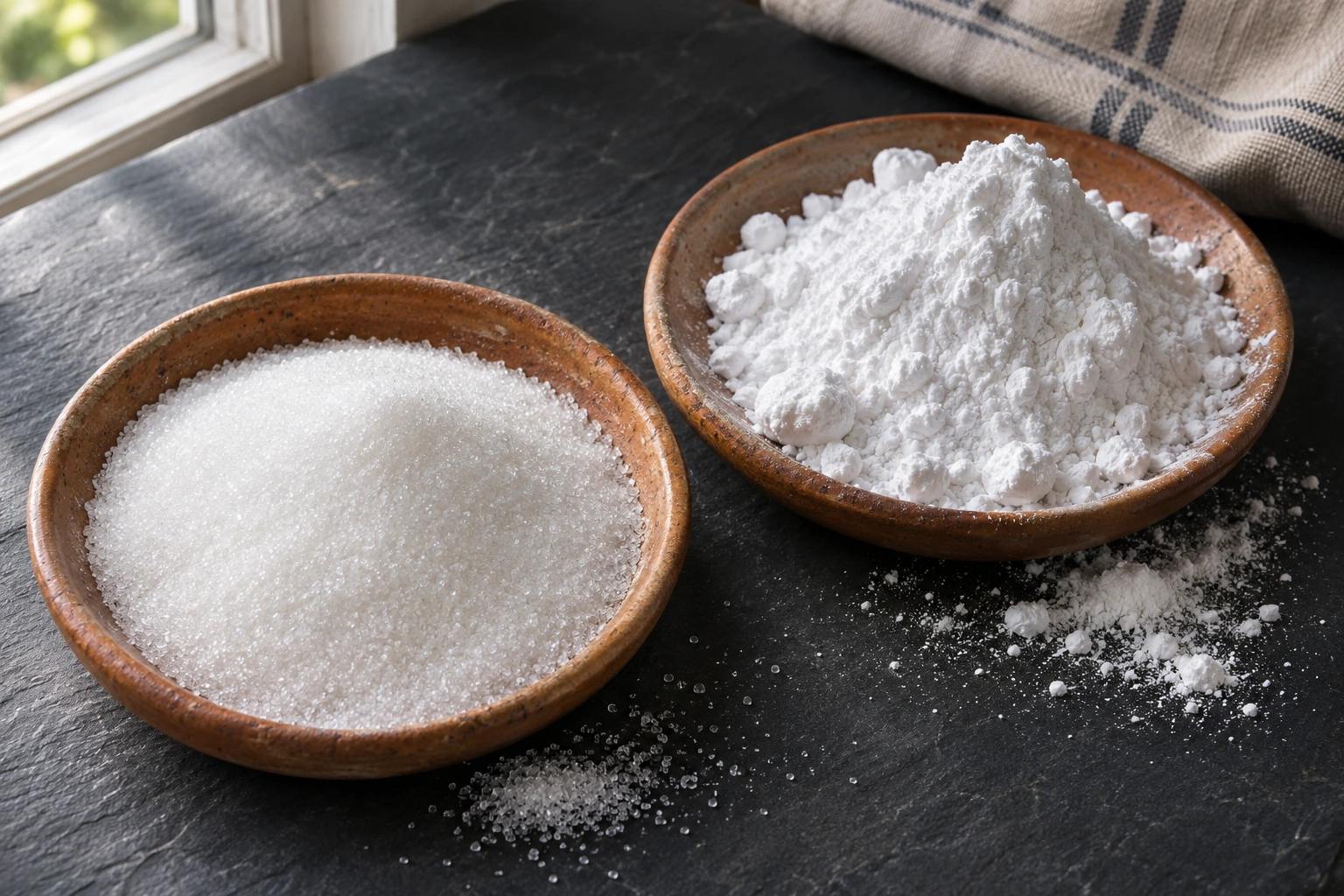
Superfine sugar and powdered sugar differ mainly in grain size and how they are made. Superfine sugar is still crystalline. Powdered sugar is ground into much smaller particles and may contain an anticaking ingredient. Check the form and ingredient list before treating those names as interchangeable in a cake recipe.
Look at a pinch of sugar
Tip a little of each sugar onto a dry spoon. Superfine sugar usually retains visible grains that can catch the light from the side. Powdered sugar tends to look smooth and soft, leaving a fine trace when the spoon is tilted. Packaging and moisture can make either one clump, so a single photograph may not identify it reliably.
The Indonesian phrase “gula halus” can be ambiguous. It may describe small crystals on one label and powdered sugar in everyday conversation. When following a recipe in English, check whether it calls for superfine or caster sugar, or for powdered or confectioners’ sugar. Use the recipe and the information on the product actually in front of you.
Where a recipe asks for regular granulated sugar, check whether it gives a particular grain size. White colour alone is a poor selection criterion. Sugars that look similar through a package can leave different marks and behave differently when mixed into a liquid.
Read the grains and ingredient list
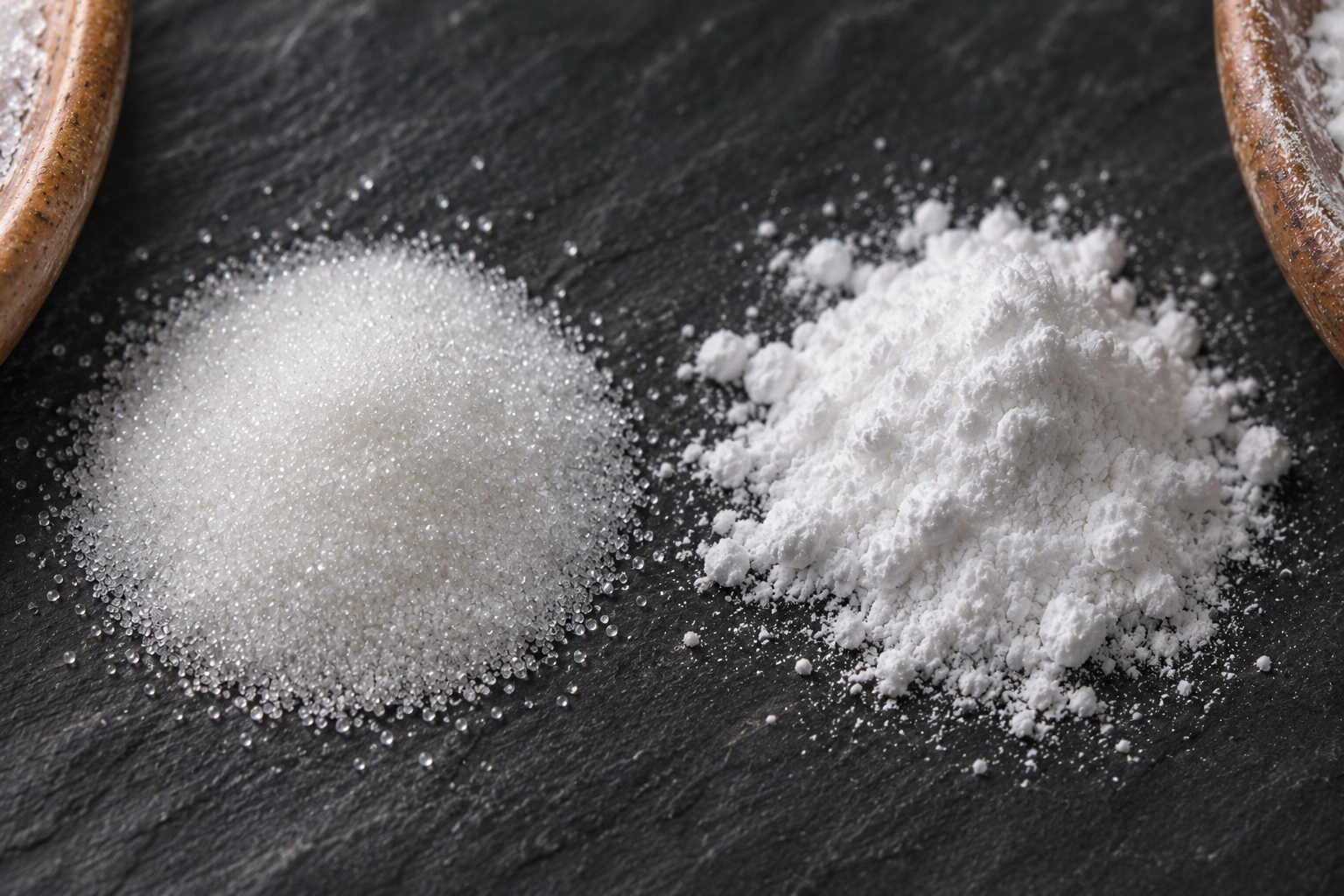
The Sugar Association groups sugars by attributes including crystal size and explains that commercial powdered sugar may contain cornstarch to limit caking. Read the actual label because composition can differ by product. Types of sugar from The Sugar Association
Think about where the sugar will go. Small crystals can still leave a grainy finish on a dry surface. Fine powder can make a more even dusting, though its appearance and spread can change on a damp surface. Those observations describe the sugar’s physical form. Batter results also depend on the formula and mixing sequence.
If you cannot inspect the contents, look for the ingredients and usage information on the package. One product might list only sugar, while another includes starch or something else. For a group activity, use an identifiable package and share the information from its current label.
Understand why a substitution can change batter
Particle size influences how sugar disperses as it is mixed. Smaller crystals can disperse readily in some preparations. Mixing longer or switching the type of sugar at the same time can change other conditions in the batter. Start with the sugar the recipe specifies, particularly when you are learning how to compare outcomes.
Measuring by volume can introduce another difference. Packed powdered sugar does not fill a cup the same way as a loose pour of fine crystals. Equal-looking volumes may weigh different amounts. If the recipe provides weights, use them. Even an equal weight does not erase differences in starch content, particle size or intended function.
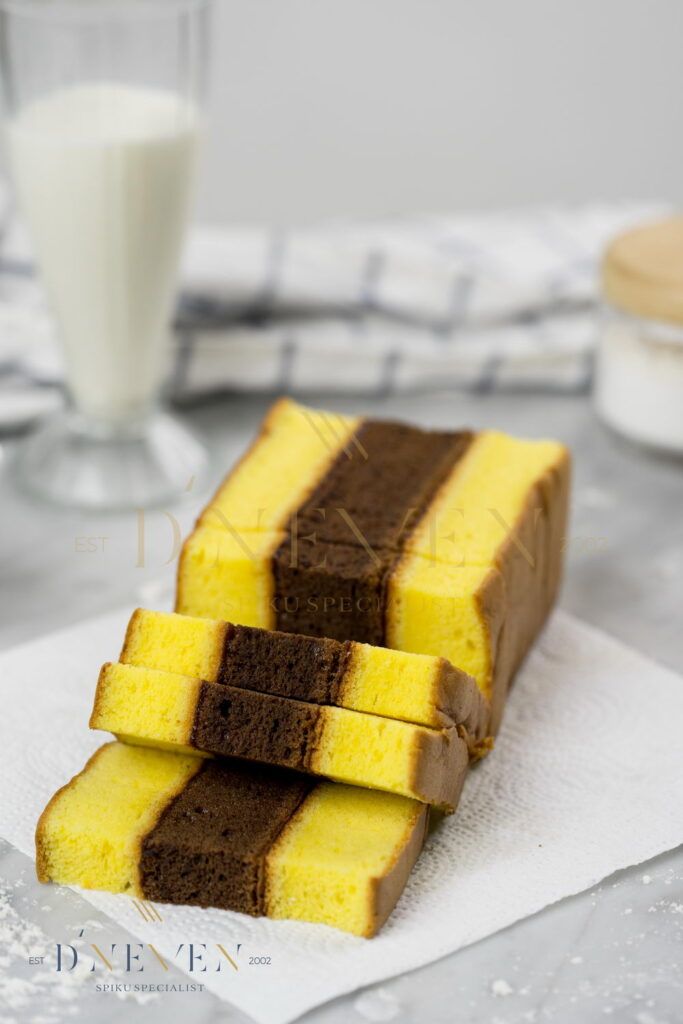
A simple example is a layer cake with a finishing dusting. The batter can follow the recipe’s specified sugar while the cooled cake gets a small dusting of powdered sugar for appearance. The topping does not establish that the same sugar belongs in all of the batter. Treat each use in the recipe as a separate choice.
Track one change when testing a recipe
When comparing sugars, change one thing in a trial you can repeat. Note the product, ingredients, amount and intended result. Keep the base recipe, pan size and presentation method as consistent as possible. If appearance is the question, take photographs of the slices under similar light.
Choose a narrow question, such as whether the dusting remains visible by serving time or whether grains stand out on a particular surface. One whiter finish does not show that every cake made with that sugar tastes sweeter. If taste matters, consider aroma and what else is in the bite. Guide to vanilla aroma and sweetness
Name the type clearly before making a choice
Discuss the purpose before asking for sugar by a general nickname. For a recipe, check whether it needs small crystals or a powder for dusting or finishing. For a finished product from Dneven, ask for available product information when one ingredient matters to your decision. The appearance of a cake’s surface cannot establish which sugar was used.
Before opening either package, put one distinguishing word beside the ingredient in the recipe, such as “crystals” or “powder.” That small note helps someone else reach for the right bag when several packages look equally white.