Egg yolks can contribute to cake colour, flavour and batter formation. Spiku’s softness is not determined by one ingredient alone, however. Flour, fat, sugar, liquid, mixing and baking work together. The yellow appearance of a slice is therefore not enough to reveal its egg count or the maker’s formula.
Understanding ingredient functions helps us ask better questions when choosing a product. The purpose is not to uncover a secret recipe, but to distinguish general cake knowledge from information actually published for a particular spiku variant. Both can be useful without being treated as interchangeable evidence.
Yolks and whites have different roles
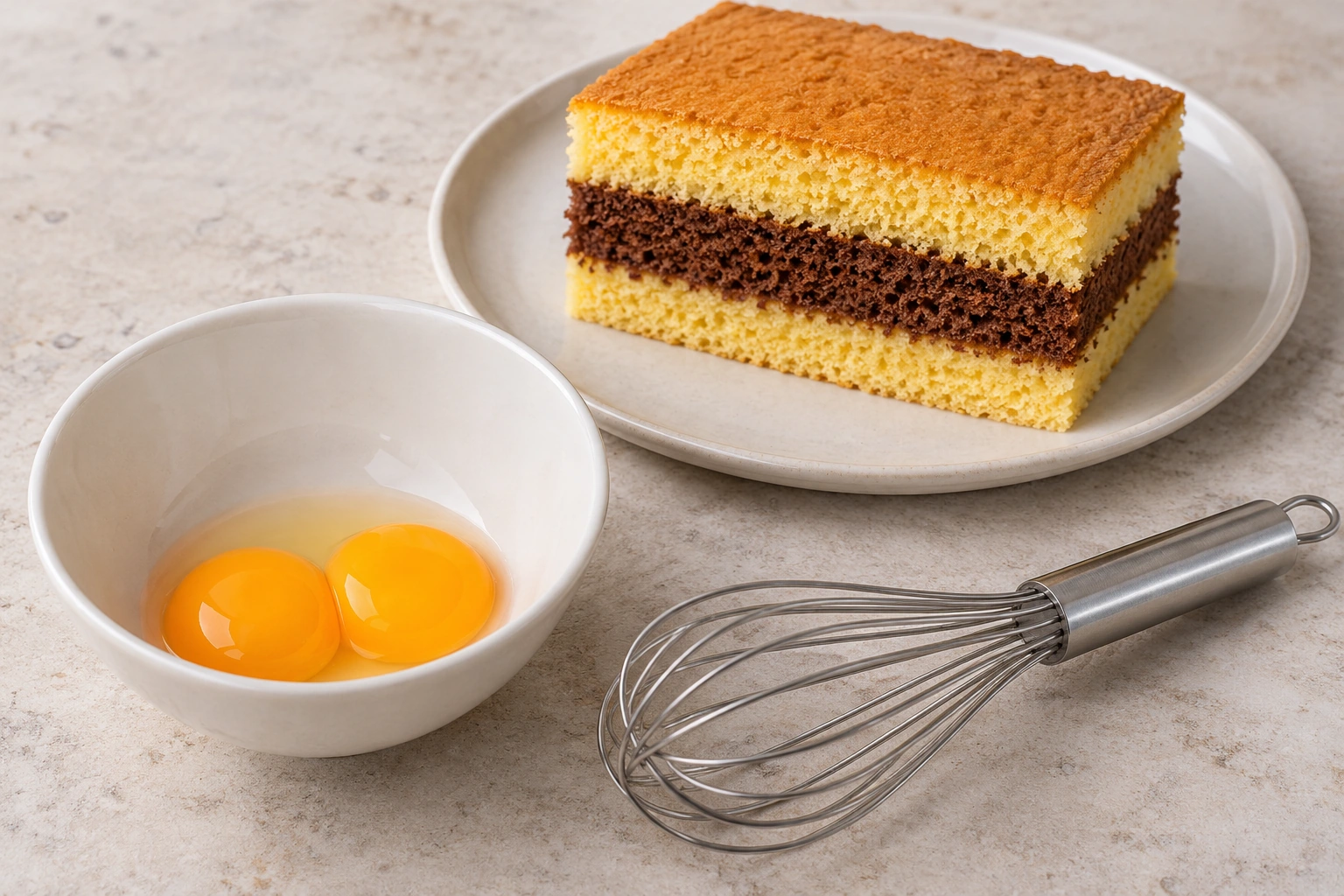
The parts of an egg do not behave identically. Yolks contain fat and components that help disperse fat and water, while whites have different foaming characteristics. Using whole eggs or separated components affects how a batter is assembled and the structure the recipe is designed to produce.
The American Society of Baking’s ingredient explanation describes several egg functions in bakery products. Use those functional principles without concluding that every cake requires the same quantity or method. Information about an individual product must come from its maker.
As a buyer, you do not need to assume a cake is better simply because it is said to contain more yolks. Batch size, product weight, other ingredients and intended results affect what the number means. Two egg-count claims without a comparable batch basis do not establish a fair comparison.
Emulsification helps a batter combine
A cake batter may contain both water-based and fatty components. Emulsification concerns how those components are dispersed through the mixture. Yolks support this function, while ingredient balance, temperature and mixing sequence also affect the result. It is a relationship within the batter rather than an isolated quality badge.
UGM research on egg functions in sponge cake considers foaming and emulsifying abilities as relevant functional properties. This explains why a discussion of eggs extends beyond adding a yellow colour. Different properties contribute to different aspects of the mixture.
Do not turn a functional explanation into a substitution instruction. Reducing whites or increasing yolks can change several things simultaneously. If baking at home, follow a recipe developed for that composition rather than exchanging quantities based on the appearance of a purchased cake.
Colour does not measure yolk quantity
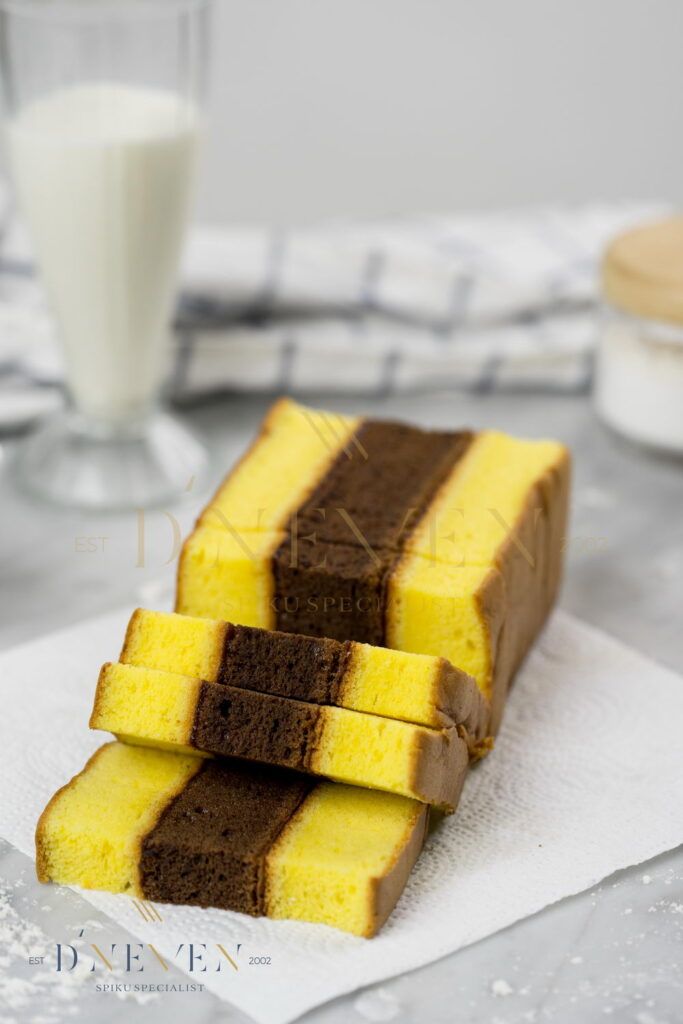
Yolks may contribute to cake colour, but the final appearance also reflects other ingredients and processing. Photographs add the effects of light, camera settings and screens. A slice that appears more yellow does not prove it contains more yolk than another slice.
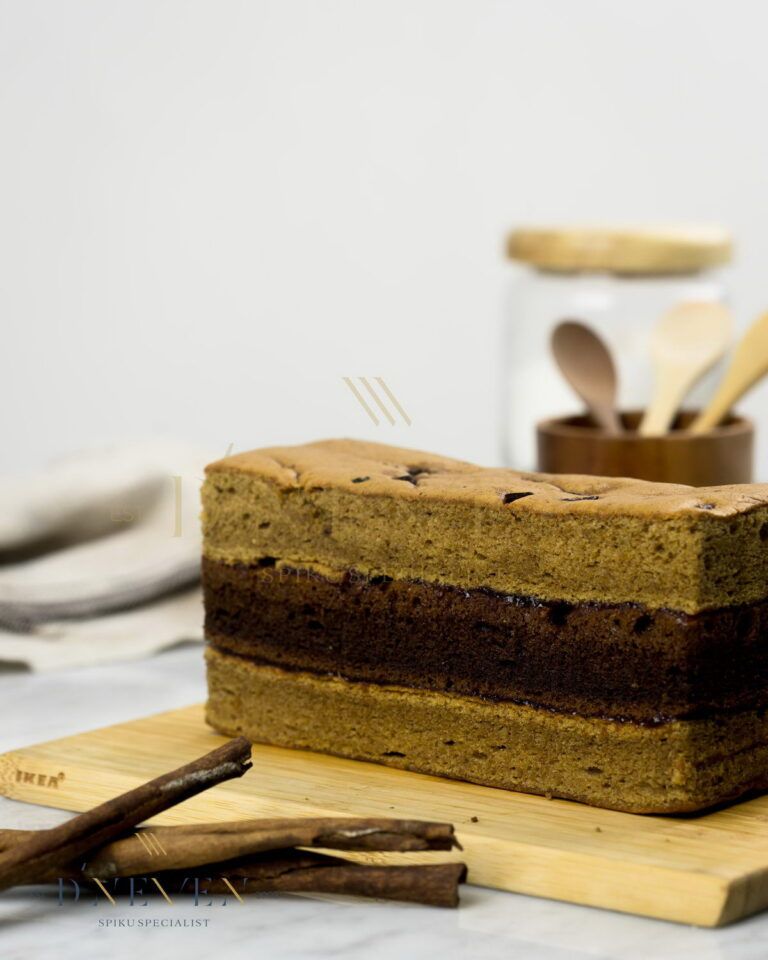
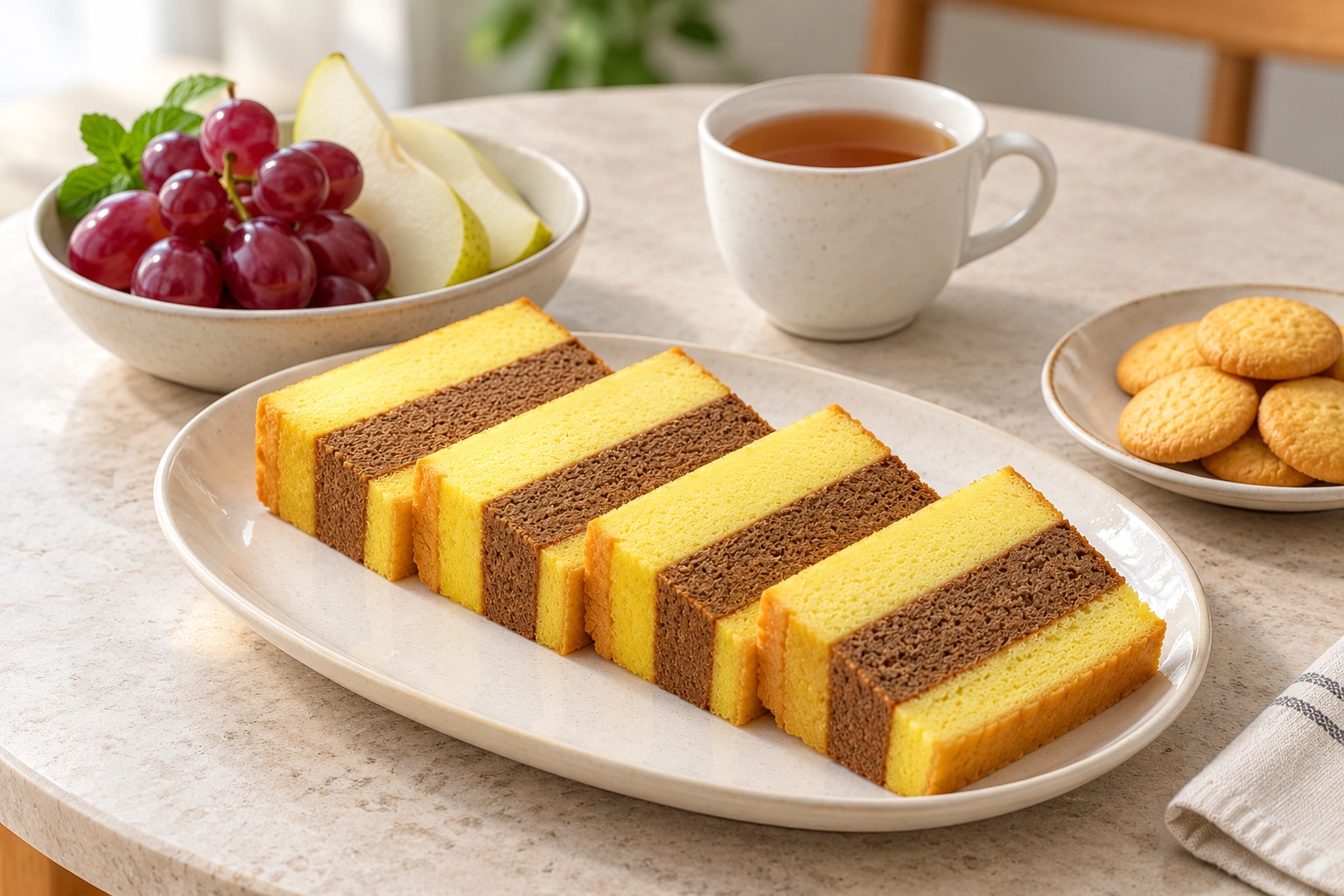
Compare product photographs in their proper context. A close view of the cut face can show layers and crumb, but it is not a composition report. The same product may look warmer or paler under different lighting. A visual difference can be real in the photograph without establishing an ingredient difference.
For ingredient questions, use variant information and answers from the seller. Avoid presenting a guess such as “this colour must come from a particular ingredient” as a fact. Record what can actually be observed instead of converting appearance into certainty about a recipe.
Read texture as a combination of factors
Soft cakes can differ in crumb structure, moisture and density. Yolks form part of that system rather than being its only driver. Pore size, slice thickness and serving conditions also affect the eating experience. One observation cannot explain every aspect of the finished product.
Make simple notes about fine or open crumb, dominant flavour and how the layers feel together. Avoid judging quality from one sign. A denser cake is not automatically unsuccessful; it may belong to a different product style or be designed for a different eating experience.
For D’NEVEN SPIKU Classic Original, start with the published flavour and product description. Use it to understand the variant’s character. Questions about detailed composition, ingredient requirements or suitability should still go through the official contact channel rather than being answered from a generic ingredient article.
Separate tasting notes from composition records
Suppose two slices taste different when sampled together. A defensible note describes the experience: one tastes richer, has a closer crumb, or has a stronger chocolate aroma. Those observations do not establish how many yolks were used. Other ingredients and serving conditions can also affect the comparison.
Keep two columns when saving the results. One holds personal observations, while the other contains product information obtained from an official source. Do not move an assumption into the second column simply because it sounds plausible. Separating these kinds of information helps a family or team choose according to preference without repeating ingredient claims that have never been confirmed.
Prepare questions that can be answered
Instead of asking the seller to guess your preferences, explain what you need to know. Ask whether ingredient information is available for the chosen variant, which flavour characteristics distinguish it, and what size can be ordered for the required date. Specific questions are more useful than simply requesting the “most premium” option.
For allergen requirements, ask about the exact product and variant. Chocolate or vanilla layers and visible toppings do not establish the cake’s complete contents. A clear description of the recipient’s requirements is more useful than assumptions based on the colour of a slice.
Keep relevant answers with the variant name so they are not confused during a later order. Confirm again if the product or requirement changes. General egg-yolk knowledge then helps you read products more carefully, while the purchase decision remains grounded in information about the actual spiku being selected.